Your body is under siege from thousands of synthetic chemicals it was never designed to process. When your detox pathways are overwhelmed, the downstream effects hit exactly where you can't afford it: cognitive clarity, body composition, hormonal balance, and cardiovascular health. The sauna isn't a luxury — it's a high-leverage tool that addresses all of the above simultaneously. But only if you use it correctly.
Infrared vs. Traditional: Which Sauna Is Right for You?
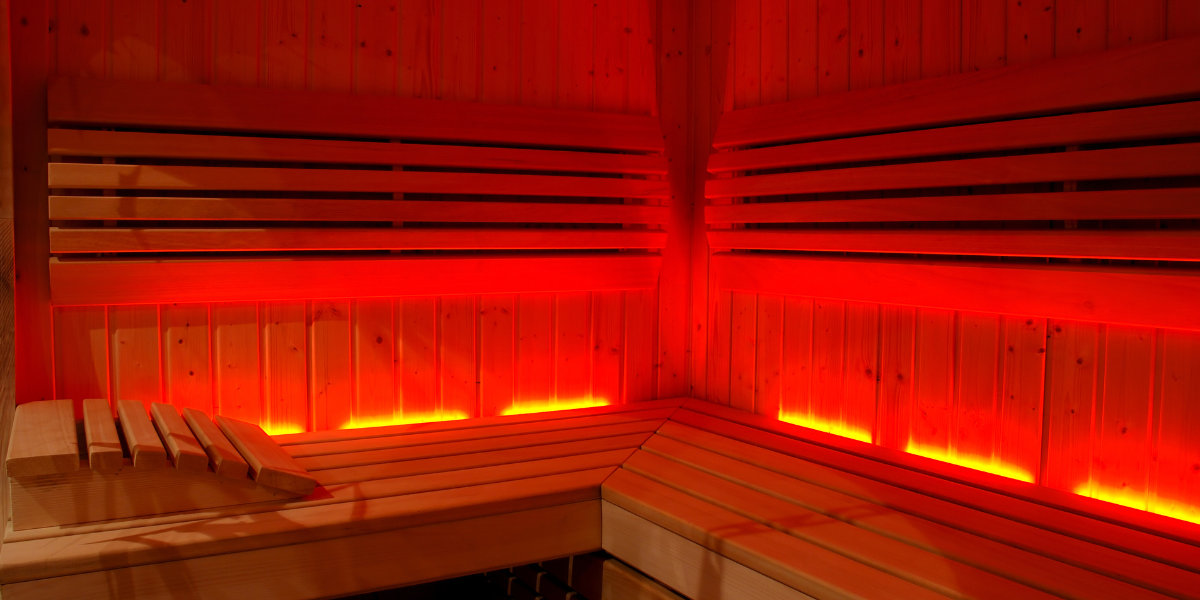
Traditional saunas heat the surrounding air to 150–195°F, driving your heart rate up aggressively — think of it as simulated moderate-intensity cardio. If you can't exercise due to injury or travel, a traditional sauna session is one of the few tools that meaningfully trains your cardiovascular system without movement. Infrared saunas operate at lower temperatures (120–150°F) by emitting light that penetrates directly into tissues. The result: deeper detoxification, improved pain relief, better skin tone, and a gentler thermal load that lets you stay in for 30+ minutes. Both cause significant sweating and detoxification; the key differentiator is your specific goal and heat tolerance.
The Efficiency Play: How to Turn 30 Minutes of Sauna Into Zero Net Time
Here's the move most business leaders miss — the infrared sauna is the only wellness modality where you can legitimately multitask. With a glass door and Bluetooth speakers, you can respond to your team's messages, record content, meditate, listen to audiobooks, or catch up on reading — all while sweating out heavy metals and training your cardiovascular system. The traditional sauna's intense heat makes multitasking difficult; use that time for deliberate heat exposure and mental resilience training. High-heat keyboards and Bluetooth peripherals exist for the type-A crowd who want to work while inside. The point: accessibility determines consistency, and consistency is everything with sauna therapy.
Super-Hot Saunas (185–210°F): The Next Level
Ultra-high-temperature saunas amplify every benefit: more aggressive cardiovascular conditioning, deeper detoxification, greater endorphin release, and the production of heat shock proteins (HSPs) — cellular protectors that reduce inflammation and strengthen immune function. The intense heat also temporarily mimics a fever, a known immune-activating response. The tradeoff is real: dehydration risk climbs, tolerance must be built gradually, and dizzy or lighted-headed is your cue to exit immediately. Todd uses the ultra-hot sauna when he has access to it — but his daily driver is the infrared because it's at home and has zero barrier to use. Accessibility beats optimal in the real world.
The Stark Protocol: What Actually Works
The best sauna is the one you actually use consistently. An infrared unit that plugs into a standard 120V outlet — like the Sunlighten models — eliminates setup friction entirely. Start with 15–20 minutes in an infrared sauna three to five times per week. Build toward 30 minutes. Add a traditional or ultra-hot sauna session when available for cardiovascular intensity. Hydrate aggressively before, during, and after every session. Combine with a dedicated detox protocol and regular measurement of your toxic burden markers. We don't guess. We measure.
Key Takeaways
Traditional saunas (150–195°F) deliver superior cardiovascular training by driving heart rate higher — a genuine option for those with exercise limitations.
Infrared saunas penetrate deeper into tissue, are more comfortable for longer sessions, and are the practical daily-use choice for most business leaders.
Super-hot saunas (185–210°F) produce heat shock proteins, amplify detox, and build mental resilience — but require caution and gradual acclimation.
The efficiency hack: infrared saunas allow multitasking (messages, meditation, audiobooks), converting sauna time to zero net time cost.
Consistency beats intensity — the sauna you have at home beats the perfect one you drive 30 minutes to use twice a month.
Ready to measure your actual toxic burden, cardiovascular markers, and body composition — not just sweat and hope? Book your free session with Stark and find out exactly where you stand.
Medical Disclaimer: This content is for informational and educational purposes only and is not intended as medical advice. Always consult a qualified healthcare provider before beginning any new health protocol, including sauna therapy. Individual results vary.


.png?width=70&height=70&name=Stark_LogoMark%20(1).png)

 Stark : Apr 9, 2023, 4:41:00 PM