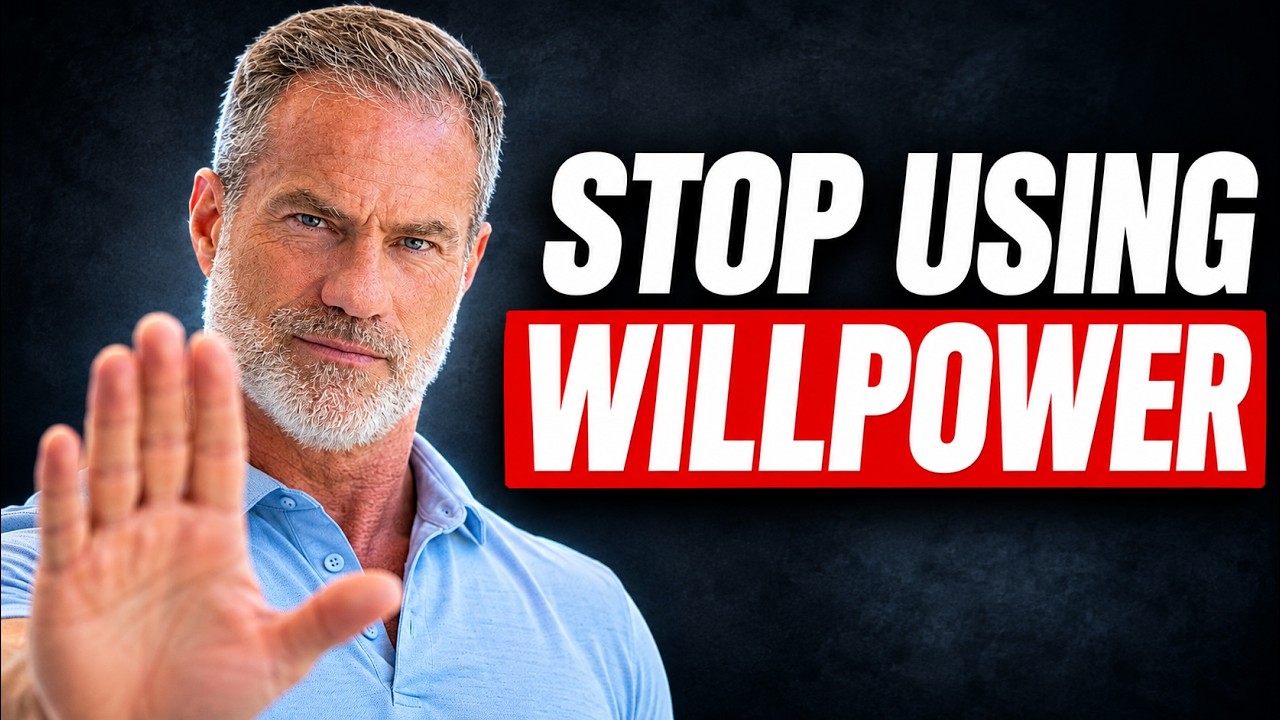
Willpower is a lie. The people who seem to have it aren't stronger than you — they just found a better addiction. If you're a high performer who has watched your body quietly fall behind while your output stayed high, the problem isn't discipline. It's the circuit your brain uses to encode and reinforce every behavior you repeat. That circuit doesn't judge. It doesn't distinguish between a drink and a deadlift. It just asks: did that produce a reward? And once it gets its answer, it makes you want to do it again.
The Mesolimbic Circuit Has No Moral Opinion
Your brain's reward pathway — the mesolimbic dopamine system — doesn't care whether the behavior feeding it is building you or destroying you. It simply asks one question: did that behavior produce a reward? If the answer is yes, it encodes it, strengthens the neural pathway, and makes you want to do it again. Alcohol triggers dopamine. Exercise triggers dopamine. Junk food triggers dopamine. Cold plunges trigger dopamine. Gambling, sex, scrolling Instagram — same circuit, same mechanism, same compulsion.
Dr. Anna Lembke, psychiatrist at Stanford and author of Dopamine Nation, has spent her career studying this. Her clinical finding is both simple and radical: addiction is not a moral failure — it's a mismatch between the reward circuit and the behavior feeding it. You can't eliminate the circuit. That's how we're designed. You can only redirect it. And this is where most people go wrong.
Why Removing Habits Without Replacing Them Always Fails
Most people trying to change their behavior decide to stop something — stop drinking, stop eating garbage, stop the late nights. And it works, but only briefly. Here's what actually happens: when you remove a behavior that was feeding the dopamine circuit, the baseline doesn't stay flat. It drops. The dopamine gap — Lembke's term for it — creates anxiety, restlessness, and irritability. Your brain is in withdrawal, and it is screaming for the reward you took away.
Most people don't fail because they're weak. They fail because they removed a behavior without replacing it with something that hits the same circuit hard enough. The gap left behind is the enemy — not the original habit.
"High performers who actually transform their health don't white-knuckle their way through. They find something that hits even harder." — Todd Vande Hei
What 15 Years of Running Stark — and a Stroke at 57 — Taught Todd
Todd Vande Hei had his first AFib episode at 31. A cluster of grand mal seizures followed shortly after. Then a stroke at 57. Each event forced a reckoning with what he was using to manage stress, feel rewarded, and decompress at the end of a hard day. Some of those things were building him. Some weren't. What 15 years of running Stark reinforced every single day is that the same circuit driving destructive habits can be redirected to drive extraordinary ones — but only if the replacement is demanding enough to actually satisfy it.
The mirror matters in this process, too — but not as vanity. Vanity is comparing yourself to someone else. Progress is comparing yourself to who you were 90 days ago. One feeds insecurity. The other feeds the dopamine circuit in a way that compounds over time and makes the behavior increasingly hard to quit. That's the whole game: get the circuit working for you instead of against you.
The Five-Step Protocol for Redirecting Your Reward Circuit
This isn't motivational theory. It's a practical sequence, applied daily at Stark with students who are running companies, raising families, and carrying more than most people will ever manage.
- Stop moralizing. You don't have bad habits because you're a bad person. You have them because your brain found something that works. Remove the shame and put the focus on the circuit, not your character.
- Identify the underlying reward. What is the behavior actually delivering — stress relief, control, pleasure, social connection? You need to know what it's providing before you can replace it.
- Replace, don't remove. Find something that delivers the same underlying reward through higher-effort behavior. Exercise, cold exposure, competition, structured fasting. The harder it is, the stronger the dopamine response.
- Make the replacement hard enough. Low-effort swaps don't work. A walk instead of a workout, a smoothie instead of a real meal — the brain compares the reward and goes back to what worked before. Difficulty is the point.
- Stack wins and measure progress. Use the DEXA scan, the bloodwork panel, the mirror — not to judge yourself, but as measurement tools. When you can see and quantify the results of consistent hard work, the reward loop tightens. Progress is the fuel that makes the new behavior self-reinforcing.
Key Takeaways
- Your brain's dopamine circuit encodes every repeated behavior — it has no moral preference for which ones it strengthens.
- Removing a habit without a replacement drops your dopamine baseline and creates cravings. That's not weakness — it's neuroscience.
- The replacement behavior must be demanding enough to satisfy the circuit. Easy swaps don't work.
- Measuring real, visible progress — DEXA, bloodwork, performance benchmarks — is what makes healthy habits as sticky as destructive ones.
- Your brain will be addicted to something. The only question is whether you chose the addiction or it chose you.
Medical Disclaimer: The information in this post is for educational purposes only and does not constitute medical advice. Always consult a qualified healthcare provider before making changes to your health protocol.
Ready to build a body that performs?
Start with the Stark Baseline — a Doctor-led assessment that tells you exactly where you stand and what needs to change. Newport Beach & Tustin/Irvine, CA.
Schedule a Consult