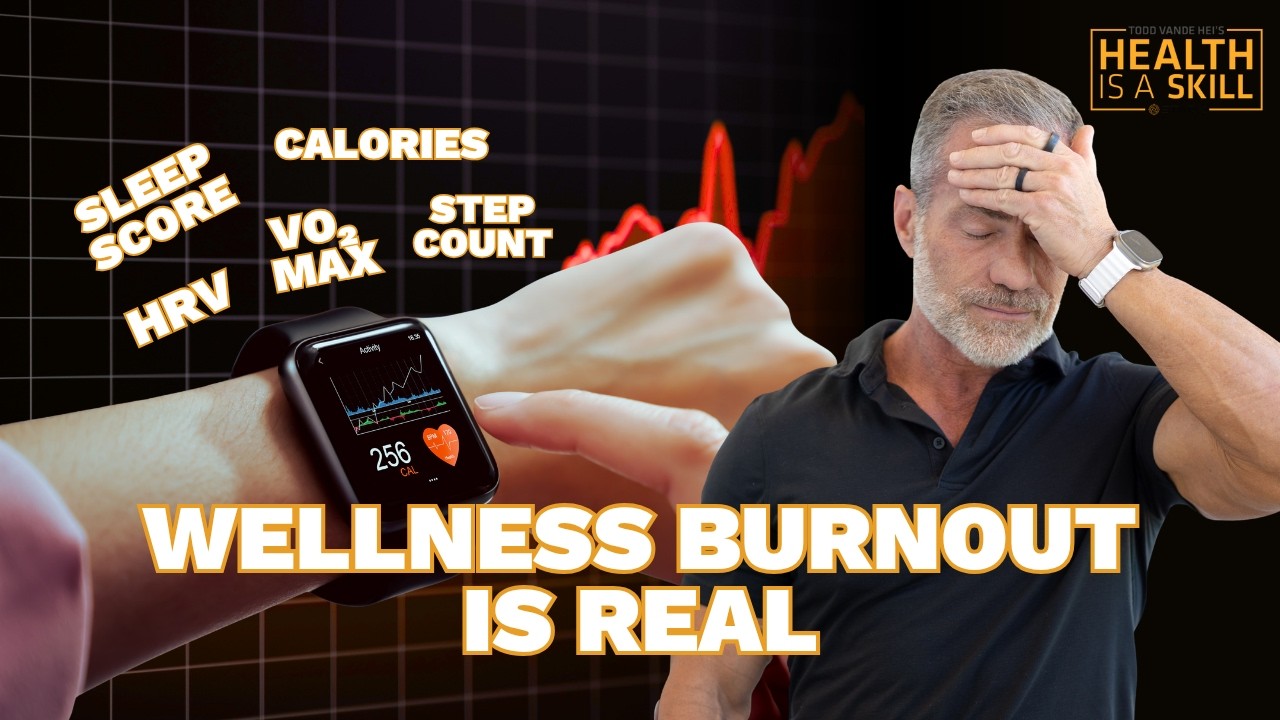
You bought a fitness tracker to optimize. Now it's 6 AM and you're checking how much sleep you lost. You're watching a red line on your heart rate variability and feeling anxious about recovery you don't have. The tool designed to help you optimize is now creating a new form of anxiety — obsessive monitoring masquerading as health.
When Measurement Becomes Dysfunction
There's a phenomenon happening in health optimization right now. Access to biometric data has become so easy that measurement has crossed from useful into pathological for a lot of people. You can track sleep, HRV, calories, steps, blood glucose, temperature, CO2 levels — almost anything. And the human brain, when given data, will naturally start to worry about it.
The problem: most of the metrics people are obsessing over are actually downstream variables. Heart rate variability is a reflection of how well you recovered. But staring at your HRV score every morning creates a feedback loop where anxiety about the number actually harms your recovery. Obsessive tracking of calories creates orthorexia. Obsessive tracking of steps creates goal-fixation. The data was supposed to serve your health. Instead, your health is now serving the data.
Optimization Burnout Is Real
I'm seeing high performers who have turned health optimization into another performance domain where they're constantly failing. Their sleep isn't perfect. Their HRV is down 5%. Their zone 2 minutes aren't consistent. They're now stressed about not optimizing correctly. The goal was to reduce stress. The outcome is more stress.
The real measure of health isn't a number. It's energy. It's the ability to handle stress without falling apart. It's the ability to sleep when you want to sleep and perform when you need to perform. Those things are trackable, but not in the way most apps measure them.
Key Takeaways
- Constant biometric monitoring can create anxiety rather than reduce it
- Downstream metrics like HRV are reflections of recovery — obsessing about them doesn't improve them
- Optimization burnout happens when measuring your health becomes more stressful than improving it
- The best health metric is how you feel and perform — numbers should support this, not replace it
- Sometimes you need to take off the tracker and trust your nervous system
Health is a skill. But optimization is not a sport where you're graded on the data. It's a process of learning to listen to your body and make choices that align with what actually matters to you.
Ready to Optimize Your Health for Performance?
The Stark Baseline gives you a complete Doctor-led health picture — measuring what actually matters for high-performing executives in Newport Beach and Tustin who want data on where their health stands and how to move it forward.
Book Your Stark BaselineServing Newport Beach (92660) & Tustin/Irvine (92782) · Doctor-led · personal training · health optimization