Most business leaders who train consistently — and train hard — are still leaving enormous performance on the table. Not because of their program. Not because of their nutrition. Because the largest, most powerful muscle group in the body is essentially switched off. Todd Vande Hei trained for decades before figuring this out. What changed in the months after he did changed how he thinks about training entirely.
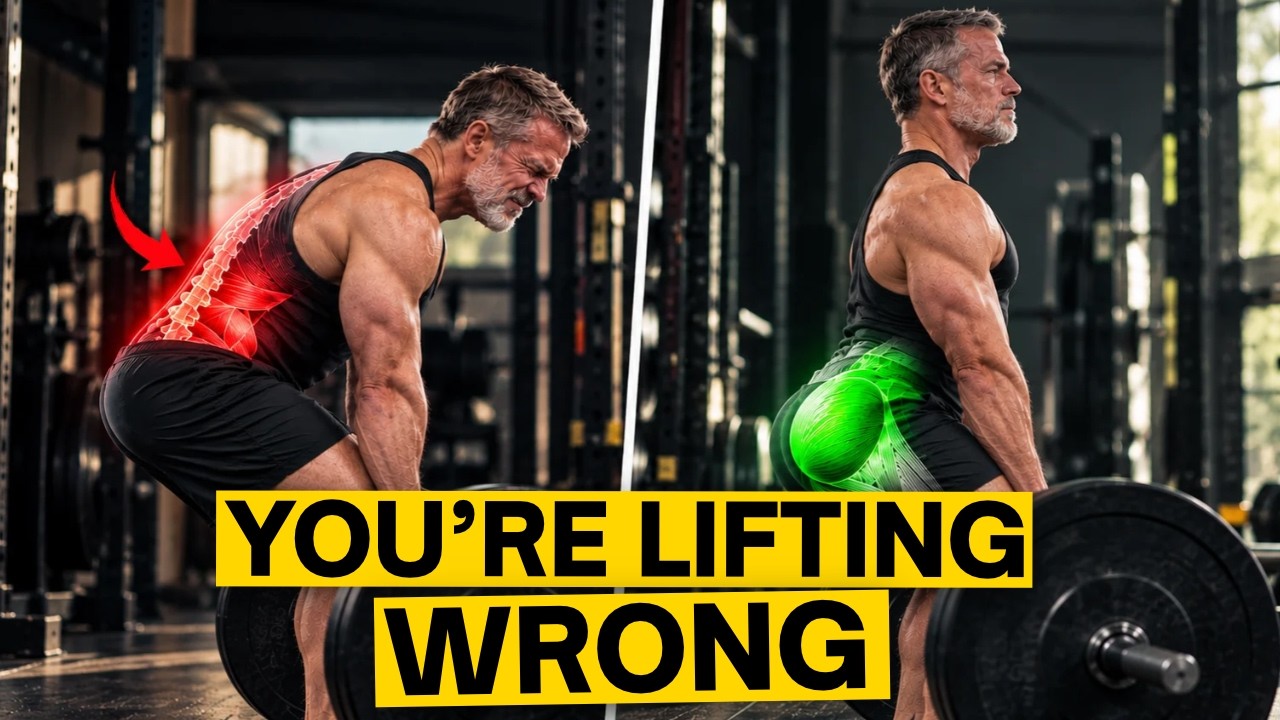
Why Your Glutes Are Probably Asleep
The gluteus maximus is the largest, most powerful muscle in the human body — or it should be. It's responsible for hip extension: the fundamental movement pattern behind walking, running, climbing, and every athletic movement that matters. But modern life systematically deactivates it.
Hours of sitting — at a desk, in a car, at a table — puts the hip flexors in a chronically shortened position and the glutes in a lengthened, inhibited one. Anterior pelvic tilt becomes the default posture. The neural pathway between your brain and your glutes weakens. And the result is a pattern you've probably already experienced without recognizing it: squats driven by the quads, deadlifts pulled by the lower back, hip thrusts that only feel like hamstrings. Your glutes are there — they're just not receiving the signal.
This is why people can train consistently for years and still have underdeveloped glutes relative to the volume they're putting in. It's not a programming problem. It's a neuromuscular activation problem. And without fixing it, you're also teeing yourself up for exactly the kind of lower back injury that comes from nowhere — bending over, picking up something light, and suddenly you're out for weeks. The problem wasn't the weight. It was the pattern.
The Longevity Case for Glute Development
If you want a reliable predictor of how long someone is going to live — not perfect, but better than almost any other single metric — you look at two things: VO2 max and muscle mass. Muscle mass after 40 drops at 3–5% per decade without intervention. After 60, that rate accelerates. The clinical term is sarcopenia — age-related loss of muscle tissue — and it's one of the strongest predictors of frailty, falls, hospitalization, and early death.
But muscle does more than move you. It's your body's primary glucose disposal system. More muscle mass means better insulin sensitivity, better metabolic health, and a dramatically lower risk of type 2 diabetes. Every pound of muscle you carry burns energy just to maintain itself — muscle is metabolically expensive in the best possible way. Dr. Gabrielle Lyon calls muscle the longevity organ. The research supports that framing without ambiguity.
And if muscle is the longevity organ, the glutes are the longevity muscle group. Strong glutes protect the hip joint — the joint most responsible for mobility and independence as we age. Hip fractures in older adults carry a 20–30% one-year mortality rate. The glutes are the primary stabilizers that prevent the fall that causes those fractures. They maintain pelvic alignment, reducing chronic lower back pain, knee tracking issues, and the cascade of musculoskeletal problems that accumulate through midlife. They support the power generation that keeps VO2 max high and metabolic rate elevated. Train them not because they look good — train them because they are the physical expression of the longevity organ doing its job at the highest level.
The Fix: One Cue, Applied to Every Movement
The change Todd made wasn't a new exercise or a new program. It was a single cue, applied consistently across every movement: posterior pelvic tilt and deliberate glute engagement before every rep.
Before a squat — engage the glutes. Before a hinge — engage the glutes. Before a press — engage the glutes. Standing between sets — slight posterior tilt, glutes switched on. The point is not to add a glute exercise. The point is to ensure the glutes are actually working during the movements that are already in your program and that are supposed to be building them.
What this does neurologically is rebuild proper motor patterns. Every deliberate glute contraction strengthens the neural pathway between the brain and that muscle. Over weeks, over months, that engagement becomes more automatic, more powerful, and more complete. The Stark coaches are seeing this consistently across students who apply this approach: better glute development with less direct glute training, because the muscle is actually working during the movements that load it. Better hip mobility. Reduced lower back pain. In many cases, it even course-corrects knee and foot problems downstream.
The Barefoot Multiplier
If you want to accelerate the process, there's a simple addition: train barefoot, or in barefoot-style shoes. Removing the elevated heel from conventional training shoes allows the foot to generate more force through the floor, which transmits directly up through the kinetic chain to the hips. More ground force means stronger glute activation, which means you get stronger faster.
If your facility allows it, pull your shoes off entirely. If not, a minimalist shoe achieves the same result. This isn't about foot strengthening as a separate goal — it's about removing a mechanical barrier to the hip drive you're already trying to train.
What the Coaches at Stark Are Seeing
This isn't just Todd's personal experience. The Stark coaches measure this in real time. Grip strength is assessed with a dynamometer at every DEXA scan, and the connection between functional strength, body composition, and biological age is visible in the data. The students who apply deliberate glute engagement — who take the posterior pelvic tilt cue seriously across every movement — show measurably better outcomes. The glutes tell the same story every time.
This is the difference between training around a muscle and training through it. Most programs are written correctly. Most execution patterns undermine them — not through bad effort, but through neuromuscular habits that decades of sitting have baked in. Correcting that pattern is available to anyone willing to apply one cue, consistently, starting in their next session.
Key Takeaways
- Chronic sitting puts the glutes in a lengthened, inhibited state — the neural signal weakens, and other muscles compensate during training.
- Sarcopenia (age-related muscle loss) and hip joint deterioration are among the strongest predictors of mortality in midlife and beyond.
- The fix is not a new exercise — it's a cue: posterior pelvic tilt and deliberate glute engagement before every rep, every movement.
- Applied consistently, this rebuilds the motor pattern over weeks and months, producing better glute development with less direct glute work.
- Training barefoot or in minimalist footwear amplifies ground force transfer through the kinetic chain, accelerating results.
- At Stark, glute activation and functional strength are tracked against body composition and biological age — the data consistently supports this approach.
Medical Disclaimer: The information in this post is for educational purposes only and does not constitute medical advice. Always consult a qualified healthcare provider before making changes to your health regimen.
Ready to build a body that performs?
Stark works with business leaders who are serious about long-term performance — not just aesthetics. Start with a data-driven baseline that shows you exactly where you stand.
Schedule a Consult